
Why BrainAccess?
At BrainAccess, we create intelligent, portable, and affordable EEG systems designed to simplify and accelerate brain research, BCI development, and cognitive applications.
You think about discovery. We handle the rest.
Electroencephalography (EEG) has evolved from a niche laboratory tool into one of the most versatile technologies for understanding, interacting with, and augmenting the human brain.
Thanks to advances in portable hardware, AI-driven analysis, and flexible software, EEG is now accessible to researchers, developers, and innovators across diverse domains.
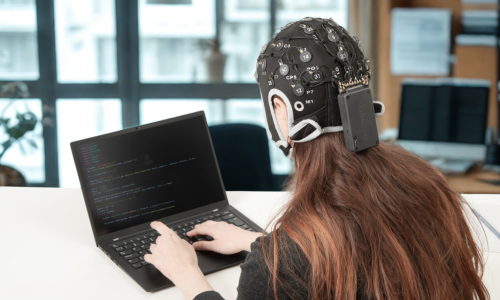
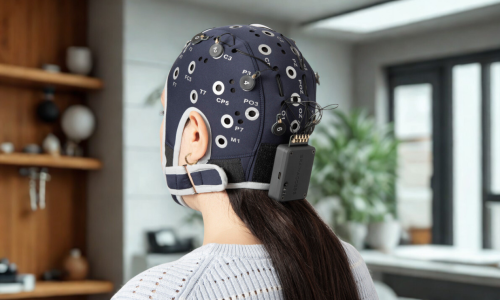
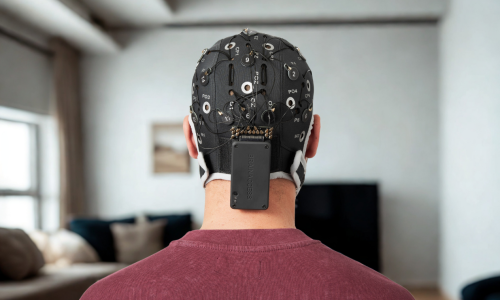
At BrainAccess, we design mobile dry-contact electrode solutions designed to bridge the gap between cutting-edge neuroscience and real-world applications.
Our products are suitable for:
- Scientist exploring brain mechanisms
- Educator teaching cognitive neuroscience
- Companies building neuroadaptive products
- Students and developers who enjoy exploring the brain and create their own BCI apps
- Researchers working in the field, who need lightweight, portable, efficient solutions
- Individuals who want to monitor their brain patterns to improve productivity, relaxation, meditation, and more.
If you fall into one of these categories, BrainAccess provides the flexibility and reliability you need.
Below, you can find some of the key areas where BrainAccess EEG systems excel.
Neuroscience Research
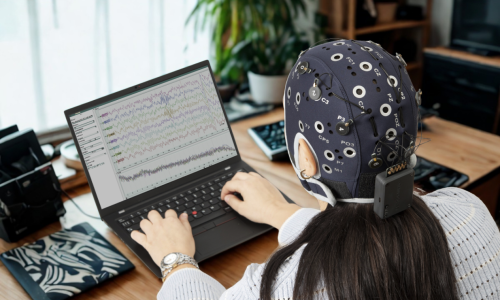
EEG remains a cornerstone in neuroscience, allowing non-invasive measurement of brain activity with millisecond precision.
BrainAccess solutions are optimized for experimental use, combining high-quality data with portability and ease of setup.
Example Applications:
- Cognitive Neuroscience: Studying attention, perception, memory, and decision-making in both lab and real-world environments. For instance, researchers can measure alpha oscillations during resting states or examine event-related potentials (ERPs) in response to stimuli.
- Clinical Research: Investigating biomarkers of neurological conditions such as epilepsy, dementia, or sleep disorders. Dry-electrode systems reduce setup time, making EEG practical for patient studies outside the clinic.
- Naturalistic Experiments: With mobile EEG, researchers can move beyond controlled labs and study brain activity in everyday environments, such as while watching films, or engaging in conversations.
By lowering barriers to entry, BrainAccess empowers universities, companies, and independent labs to explore the brain more flexibly than ever before.
Our team includes experts from multiple backgrounds who can support you and help you design your experiment and tackle different challenges.
Get in touch with us for a collaboration or if you need more information.
Brain-Computer Interfaces (BCI)
Brain-Computer Interfaces translate neural activity into control signals, enabling direct interaction between the brain and external devices. BCIs are one of the most exciting frontiers in neurotechnology, and BrainAccess makes experimentation in this space more accessible.
BrainAccess hardware and SDKs allow developers to prototype and test BCI applications rapidly, supporting innovation in both academic and commercial settings. We provide SDK in Python, C, and C++, and Kotlin for Linux, Windows, and Android app development.
Some Applications:
- Assistive Technology: Enabling communication or mobility aids for individuals with severe motor impairments, such as controlling a cursor, wheelchair, or robotic arm using brain signals.
- Gaming and Entertainment: Creating immersive neuroadaptive games where difficulty adjusts based on engagement or emotional state.
- Hands-Free Interfaces: Using motor imagery EEG signals to control drones, smart home devices, or augmented reality systems without physical input.
In two recent studies [1, 2] using our BrainAccess MIDI device, researchers explored a novel BCI system designed to enhance attention in children and teenagers by dynamically adjusting environmental distractions (such as temperature, lighting, noise, and font size). Participants completed a variety of tasks, from memory games and quizzes to chess and reaction-time challenges, while their EEG signals were continuously recorded. A concentration index based on brainwave patterns guided real-time changes in the environment through a binary search mechanism. The system achieved 94% classification accuracy, effectively distinguishing between focused and unfocused mental states and adapting on the fly.
Cognitive and Mental State Monitoring
Understanding mental states in real time opens the door to applications that adapt to users’ needs, whether in healthcare, learning, or productivity.
Some Applications:
Fatigue and Vigilance Tracking: Monitoring drowsiness in drivers or pilots, alerting them when attention levels drop.
Workload and Stress Measurement: Evaluating cognitive load in high-pressure environments such as air traffic control, surgery, or military operations.
Well-being and Meditation: Providing neurofeedback to help individuals achieve relaxed or focused mental states during mindfulness and wellness practices.
- Neuroadaptive AI Systems: Developing systems that adapt to changes in EEG signal to adjust responses, UX, or interactions in real time.
A group of researchers using BrainAccess EEG devices developed an affective computing system that classified emotions into three key dimensions: valence, arousal, and dominance. Using machine learning algorithms (including Artificial Neural Networks) they achieved up to 95.61% accuracy in recognizing emotions from EEG data. [3]
Prototyping and Developing
For engineers, data scientists, and innovators, EEG is a playground for experimentation. BrainAccess solutions are built to support prototyping and iterative development. Thanks to our SDKs and APIs in multiple programming languages, incorporating EEG data in a custom application has never been easier. This way, BrainAccess accelerates the process of moving from an idea to a working prototype making EEG accessible to developers and brain enthusiasts.
Example Applications:
AI and Machine Learning: Training algorithms on EEG data for classification tasks such as mental state decoding, anomaly detection, or personalized feedback. Recording and storing multiple datasets is easy thanks to our BrainAccess Board, SDKs, data converter, and hyperscanning capabilities.
App Development: Building mobile or desktop applications that integrate real-time EEG feedback, from productivity apps to creative music tools. This is possible thanks to our developer kits, including SDKs in Python, C, and Kotlin.
Hardware Integration: Pairing EEG with VR headsets, wearables, or IoT devices to explore multimodal interaction. All this is possible with our lightweight, portable, and fully wireless EEG amplifiers.
Every year we are proud to sponsor Heroes of the Brain, an event organized by KN NEURON, the neuroscience student association at Wroclaw University of Science and Technology.
This neurohackathon is a unique opportunity to see brilliant minds in action: developers, researchers, and brain-tech enthusiasts compete to build the best BCI application in just 24 hours using our BrainAccess devices and development tools (SDK and API).
The 2025 edition took place on November 29, and it was an absolute blast! Participants dove enthusiastically into our new releases, explored the updated tools, and impressed us with their creativity, teamwork, and passion for neurotechnology.
Read more on our blog.
Education and Training
Teaching neuroscience and human-computer interaction can be difficult without practical, hands-on tools. BrainAccess makes EEG approachable and engaging for classrooms, workshops, and training programs, giving students the chance to explore brain activity in real time.
Beyond teaching, EEG can also become a tool inside the classroom itself. With BrainAccess, educators and researchers can non-invasively measure students’ and teachers’ engagement, attention, workload, cognitive effort, and even aspects of well-being during the learning process. This opens the door to more evidence-based teaching, adaptive learning environments, and deeper insights into how people learn and communicate.
Example Applications:
University Courses: Demonstrating neural oscillations, ERPs, or BCI principles with live EEG recordings.
STEM Outreach: Engaging students in neuroscience through interactive demonstrations such as controlling a game with brain signals.
Professional Training: Teaching clinicians, psychologists, or engineers how to record and interpret EEG data.
- Monitoring the Effects of AI on Teaching and Learning: Use EEG to evaluate how AI tools influence teachers’ and students’ attention, cognitive effort, and workload during the educational process.
Because BrainAccess devices are quick to set up, wireless, and gel-free, they are ideal for classrooms, workshops, and at-home learning environments where time, comfort, and accessibility matter most.
The Artificial Intelligence Tools for General Education Teachers (AItools4Teachers) project investigates how AI technologies can improve teachers’ work efficiency in Latvian K–12 schools, with a focus on non-contact time (NCT) tasks such as lesson planning, material creation, assessment, and communication.
The initiative aims to identify ethical, effective, and practical ways for educators to integrate AI into their daily workflow to enhance productivity, well-being, and work-life balance.
Its key goals include reviewing international best practices, evaluating how AI tools influence teachers’ NCT efficiency and well-being, and developing a national strategy for implementing AI in K–12 education.
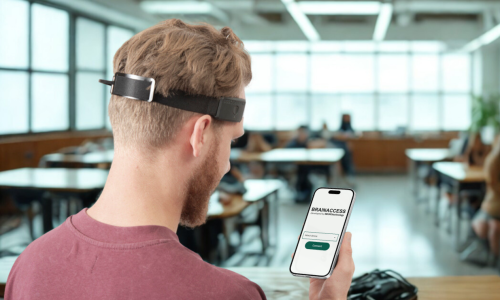
As part of the project, BrainAccess HALO devices will be used to monitor how teachers’ brain activity and cognitive state change while using AI tools, providing objective insights into the cognitive load and efficiency effects of AI-assisted workflows.
Neuromarketing
Consumer neuroscience, or neuromarketing, uses EEG and physiological measures to understand how people respond to products, advertisements, and experiences. BrainAccess offers a cost-effective and scalable way to apply EEG in commercial research.
Example Applications:
Advertising: Measuring engagement and emotional responses to TV commercials, online videos, or product placements.
Product Design: Testing packaging, branding, or retail layouts to identify what captures consumer attention.
UX and Media Research: Understanding how users interact with apps, websites, or games on a cognitive and emotional level.
By quantifying brain responses, companies can move beyond self-reports and capture unconscious drivers of consumer behavior.
Hyperscanning
Hyperscanning refers to recording EEG simultaneously from multiple people, enabling the study of social interactions and shared brain dynamics.
BrainAccess makes hyperscanning remarkably easy and accessible. Our devices are fully wireless, comfortable, and portable, so participants can interact naturally, whether they’re sitting in a lab or moving freely in real-world environments.
With built-in multi-device support, you can connect several BrainAccess systems at once and stream all data in real time. Thanks to native LSL (Lab Streaming Layer) synchronization, every device stays perfectly aligned on the same timeline, allowing researchers to compare brain activity across participants with high accuracy.
The BrainAccess Board desktop app and the mobile app both support multi-device recording, from a controlled lab setup using one computer, to mobile hyperscanning using multiple phones on the same Wi-Fi network. You can even combine the two in hybrid experiments.
Because BrainAccess provides SDKs (C, Python, Kotlin, etc.) and works across platforms like Windows, Linux, and Android, researchers can easily build their own custom multi-user BCI or social neuroscience applications.
BrainAccess is ideal for hyperscanning because it offers:
Wireless, portable devices for natural interaction
Seamless multi-device connection
Precise timing and sync through LSL
Flexible desktop, mobile, and hybrid setups
Open tools for building custom experiments
With hyperscanning, BrainAccess enables researchers to explore how brains connect across groups, providing a scalable and user-friendly way to capture synchronized brain activity from multiple people at once.
Some Applications:
Collaboration Research: Measuring neural synchrony between team members working together on problem-solving tasks.
Education: Analyzing teacher-student brain coupling during lectures or group learning.
Communication: Explore the neural foundations of real-world communication, from conversations to joint decision-making, by tracking how brains align during interaction.
Social Interaction: Assess brain synchrony in natural or structured settings, including collaborative and competitive games or tasks, or everyday social exchanges.
Conclusion. Versatility in Action
The strength of BrainAccess lies in its adaptability. A single device can move between fields: used for BCI research one day, classroom demonstrations the next, and neuromarketing studies the following week.
This flexibility reduces cost and maximizes impact, ensuring that EEG technology is no longer confined to specialized labs but becomes a widely applicable tool for science, education, and industry.
BrainAccess solutions open doors across disciplines, from fundamental neuroscience to applied industry research. By making EEG more accessible, portable, and developer-friendly, BrainAccess empowers a new generation of discoveries and applications. Our technology supports research in cognitive neuroscience, brain-computer interfaces, wellbeing monitoring, neuromarketing, and human-machine interaction—areas that traditionally required expensive or specialized laboratory setups.
By removing financial, technical, and logistical barriers, BrainAccess enables researchers, developers, clinicians, startups, and educators to incorporate EEG into real-world environments and workflows. Projects that were once limited to large institutions can now be carried out by smaller labs, university programs, or independent innovators.
Whether you are exploring cognitive processes, developing next-generation interfaces, or studying group dynamics, BrainAccess gives you seamless access to the brain, allowing you to collect high-quality EEG data anywhere, iterate faster, and unlock insights that drive scientific progress and innovation.
Publications with BrainAccess
[1] Darius-Cristian, B., Mihai-Robert, B., Andrei, B., Tudor, D. B., David, G. I., & Amalia-Ioana, R. (2024, October). Boosting Cognitive Focus via Binary Search of Attention Types Using Brain-Computer Interfaces. In 2024 IEEE International Conference on Systems, Man, and Cybernetics (SMC) (pp. 4512-4513). IEEE.
[2] Mihai-Robert, B. E. U., DURDUMAN-BURTESCU, T., & ISTRATE, D. G. (2025). Boosting Cognitive Focus via Attention Types Detection using Brain-Computer Interfaces: A Pilot Study. Applied Medical Informatics, 47(2).
[3] Salim, I. L., Awad, O. A., & Abdulhadi, A. S. (2024, November). An Affective Computing Electroencephalogram-based System with Machine Learning Algorithms. In 2024 International Conference on Computer Engineering, Network, and Intelligent Multimedia (CENIM) (pp. 1-8). IEEE.
[4] Salim, I. L., Jalal, A. S. A., & Awad, O. A. (2024). A Dataset for Emotion Recognition for Iraqi Autism Individuals as a Step Towards EEG-Based Therapeutic Intervention. Iraqi Journal of Information and Communication Technology, 7(3), 55-70.
[5] García-Ramírez, Y., Gordillo, L., & Pereira, B. (2025). Electroencephalography Dataset of Young Drivers and Non-Drivers Under Visual and Auditory Distraction Using a Go/No-Go Paradigm. Data, 10(11), 175.
Shop
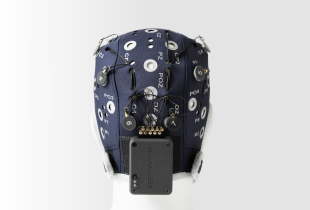
BrainAccess MINI Kit
8-channel EEG system
Cap and Electrodes included
900 € Excl. VAT
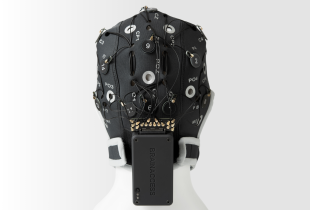
BrainAccess MIDI Kit
16-channel EEG system
Cap and Electrodes included
1,600 € Excl. VAT
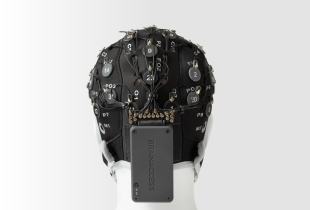
BrainAccess MAXI Kit
32-channel EEG system
Cap and Electrodes included
3,000 € Excl. VAT

BrainAccess HALO
4-channel EEG Headband
Fully integrated system
400 € Excl. VAT